


Kelly McEvers
Kelly McEvers is a two-time Peabody Award-winning journalist and former host of NPR's flagship newsmagazine, All Things Considered. She spent much of her career as an international correspondent, reporting from Asia, the former Soviet Union, and the Middle East. She is the creator and host of the acclaimed Embedded podcast, a documentary show that goes to hard places to make sense of the news. She began her career as a newspaper reporter in Chicago.
-
The Oscar-nominated documentary Bobi Wine: The People's President is the gripping story of Ugandan singer Bobi Wine and his campaign against the country's long-standing president.
-
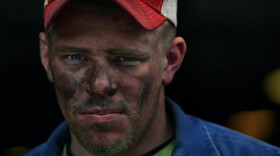 Donald Trump promised coal miners: "You're going to be working your asses off!" NPR spent more than a year in the coal counties of central Appalachia and found hope, cynicism and some surprises.
 -
 NPR's Embedded asks what the special counsel's track record could suggest about the road ahead for the special counsel, the White House and Congress.
 -
 The story of the standoff between federal agents and a fringe religious group called the Branch Davidians — suspected of stockpiling weapons — is now being retold in a six-part miniseries.
 -
Matt de la Peña's new children's book covers the good and the bad of everyday life. He says, "I had to be honest that there are going to be these things in life that are tough and that are dark."
-
 Historian and author Randall Hansen's book, Fire And Fury: The Allied Bombing Of Germany 1942-1945, has been mistaken by buyers for Michael Wolff's Trump exposé and selling out.
 -
 Fordham University graduate student Matthew Combs studies the DNA of New York City's rats. He found that rats living uptown are genetically distinct from rats living downtown.
 -
 Actress Tippi Hedren talks with her daughter, actress Melanie Griffith, and her granddaughter, actress Dakota Johnson, about how being a woman in Hollywood has — and hasn't — changed over the years.
 -
 Country music long has been affiliated with the outdoors, small towns, hunting, and in turn, guns. Country music journalist Jonathan Bernstein talks about the dynamic between the two industries.
 -
 NPR's Kelly McEvers speaks to food critic Brett Anderson of The Times-Picayune about his reporting regarding sexual harassment in the prominent Besh Restaurant Group in New Orleans.


