-
 The order directs state agencies to monitor pollinator populations, expand habitats on state-owned lands, and reduce the use of harmful pesticides.
-
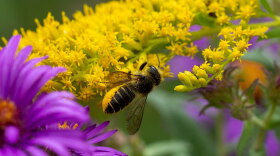 Scientists in Boulder are testing out an unusual method to measure what plants are thriving in the city, as well as what pollutants might harm the environment. The pollen collected will be tested to help gauge biodiversity in the city.
-
 A bee survey is the process of recording data to track what types of bees live in an area, how abundant they are and how those numbers change over time.
-
 Digitizing the bee collections at museums could answer important questions like whether certain species are still buzzing in the same places they once were, or if their bodies have changed over time in response to stressors like climate change.
-
 In many natural history museums, bee specimens are accompanied by little slips of paper that have details about each specimen, like the species name, who found it, where and when. It’s a treasure trove of data but it needs to be digitized.
-
 We’ve all heard about how the use of pesticides and the loss of habitat is hurting honeybees. But you probably haven’t heard about the scariest threat of all - tiny mites. Today on In the NoCo, we hear how a CU Boulder entomologist is sounding the alarm about these parasites.
-
 It's National Pollinator Week. From bees to butterflies, hummingbirds to moths, these species play a crucial role in agriculture and healthy ecosystems.
-
Across the Western bumblebee's range, populations declined 57% from 1998 to 2020, according to a study published last month in the journal Proceedings of the National Academy of Sciences.
-
 Researchers at the University of Colorado Boulder are studying how honeybees in swarms form a structure that holds all of them up.
-
 New research shows that climate change and habitat loss are causing widespread decline among bumblebees in North America and Europe — and putting ecosystems that depend on these pollinators at risk.

© 2026

NPR News, Colorado Stories
Play Live Radio
Next Up:
0:00
0:00
Available On Air Stations


